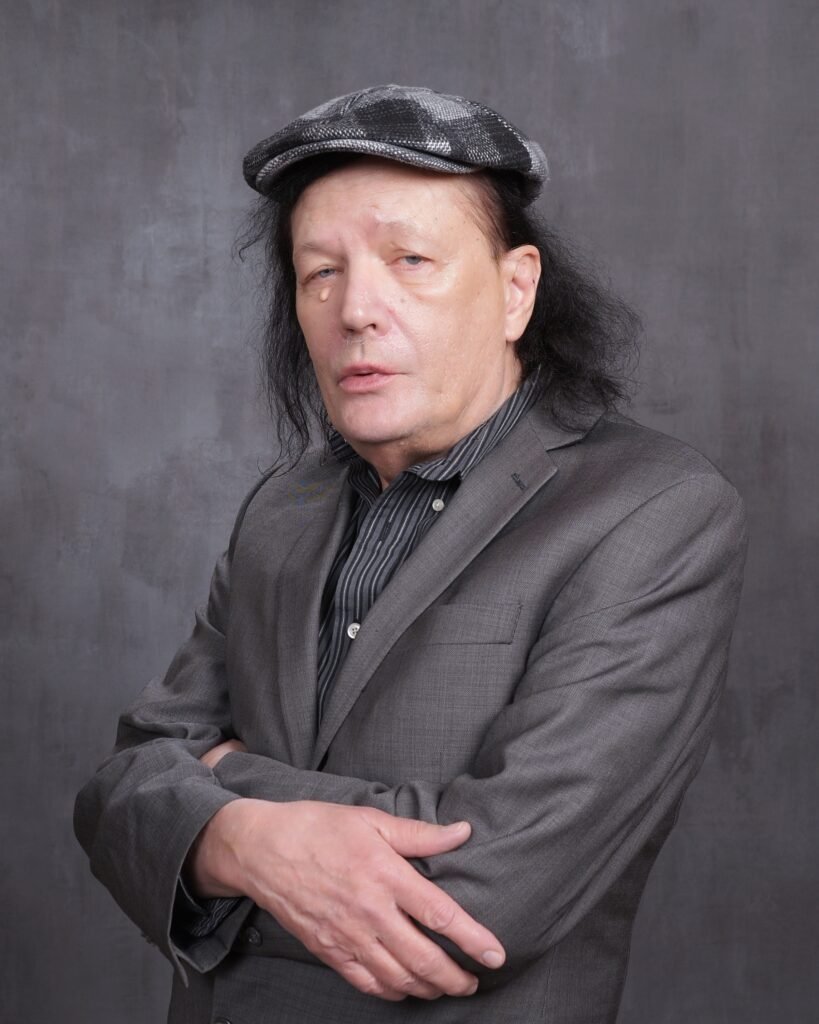
About The Author
MIchael
Johnson
Michael Johnson is an American novelist whose fiction is shaped less by literary fashion than by lived experience. A graduate of UC Berkeley, he spent years working outside academia, writing steadily while supporting himself as a delivery driver. He began writing in 1980, influenced early by Charles Bukowski, but his work quickly developed its own satirical, unsentimental voice.
Johnson’s novels focus on education, power, sex, and cultural drift, often set inside institutions that have lost their original purpose. His characters are blunt, damaged, and alert to contradiction. He avoids slogans, easy morals, and reassuring endings, preferring observation to instruction. Writing without rigid routines, he works by instinct, revision, and attention to language as it is actually spoken. Johnson lives quietly, reads widely, and continues to write with skepticism, humor, and independence, committed to documenting how people think and survive inside systems that no longer make sense.
More about The Author
MIchael Johnson
Michael Johnson has spent most of his writing life outside the usual literary pathways. He did not move easily from workshops to fellowships or from journals to tenure. Instead, he worked ordinary jobs, paid attention, and wrote steadily over decades. That distance from institutional literary culture has shaped both his voice and his subject matter. His fiction is skeptical of systems that claim authority while hollowing out meaning, and it is especially alert to how language is used to disguise failure as progress.
Across his novels, Johnson returns to classrooms, bureaucracies, reform movements, and moral crusades, not to satirize them from above but to examine them from inside. He writes about education not as an abstract ideal, but as something lived daily by confused students, compromised teachers, and administrators fluent in slogans. Sex, power, and ideology recur not as provocations, but as facts of human behavior that institutions prefer to misname.
Johnson’s style is direct, often abrasive, and intentionally uneven, reflecting the way people actually speak and think. He resists polish for its own sake, believing clarity matters more than elegance. His work is concerned less with offering solutions than with recording conditions accurately. Writing remains, for him, a way of paying attention, resisting simplification, and preserving what can still be named.